Medical Respite Care and Dignified Design: Opportunities for Creating Spaces for Healing for the Unhoused Community
AIAU25-AAH05R
 Included in subscription
1
LU|HSW
Course expires on: 06/29/2028
Included in subscription
1
LU|HSW
Course expires on: 06/29/2028
Included in subscription
Description
Medical respite care is defined as acute and post-acute care for people experiencing homelessness who are too ill or frail to recover from a physical illness or injury on the streets, but who are not ill enough to be in a hospital. Every medical respite care program shares the same fundamental elements: a short-term, safe place to stay, allowing people experiencing homelessness an opportunity to rest, recover, and heal in a safe environment while accessing medical care and supportive services. These programs are a critical opportunity to provide safety and opportunity to connect with providers and services to address the many factors contributing to a person’s experience of homelessness. To attend to the safety and healing of end users, programs would do well to employ intentional, trauma-informed, human-centered design approaches that support the mental and physical health needs presented by this population. Dignified Design is one such approach that prioritizes the needs of individuals accessing and delivering services in medical respite settings through a clear framework of principles and practices. This webinar will provide an overview of medical respite programs, their role in communities, and how the field of architecture can contribute to these programs through a Dignified Design approach, which centers the needs of people experiencing homelessness.
This session was recorded live on August 12, 2025.
Learning Objectives
Describe causes of homelessness and how the built environment contributes to a person’s health and access to basic services while unhoused.
Define medical respite programs and services.
Identify key principles for trauma informed design for populations with lived experiences of homelessness.
Describe the importance of Dignified Design as a trauma-informed design approach within the medical respite setting.
Hosted in partnership with the Academy of Architecture for Health (AAH).


Shane Bass is a Senior Project Manager at Central Health, overseeing clinical and operational integration for design and construction projects totaling $168.5M, including Austin’s first medical respite center. With a background as a Performance Improvement Project Manager at CommUnityCare Health Centers, Shane successfully developed four COVID-19 vaccination sites and resolved numerous issues related to a new EMR system. Previous experience includes serving as an Alternative Assessment Specialist at Pearson, where Shane co-led teams on a $1M product development project, and as a part-time Project Manager at Cambio, significantly increasing platform users. Shane's career began in education as a Special Educator, contributing to the development of curriculums and mentoring new teachers. Shane holds an M.S. in Special Education from Johns Hopkins University, a B.A. in English Language and Literature from the University of North Florida and studied International/Global Studies at Moody Bible Institute.
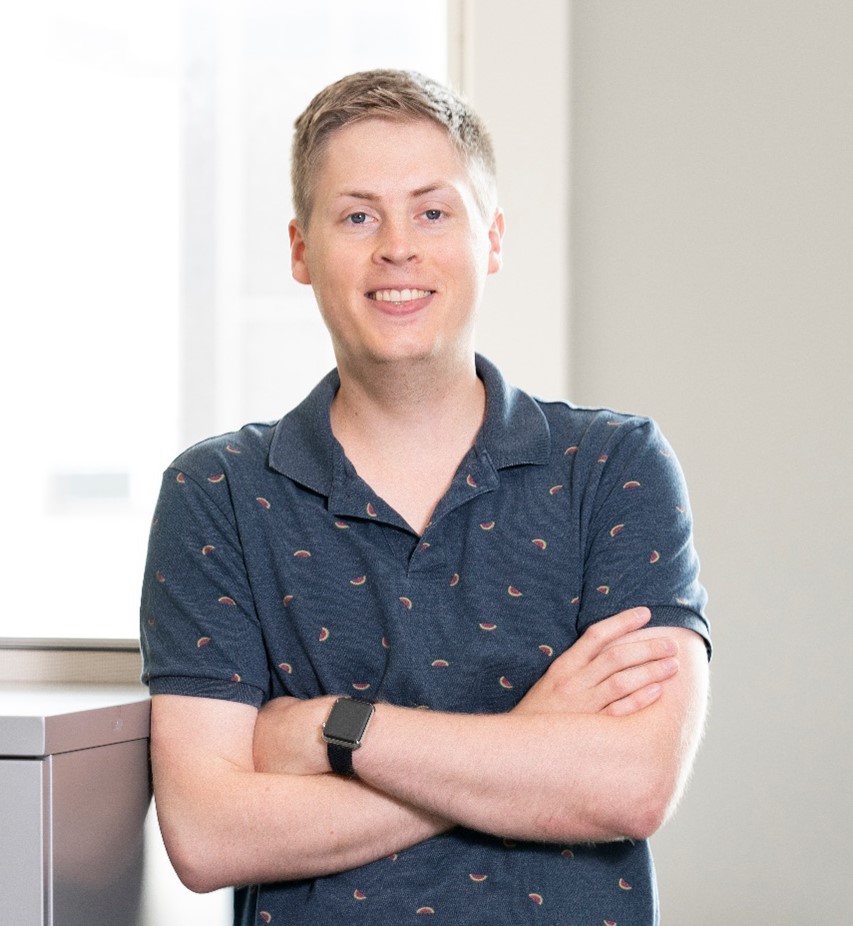
Nick Faust graduated from the University of Kansas with a Master of Architecture degree in 2018 with an emphasis in Health & Wellness Design. Nick became a licensed Architect (Texas) in 2020 and holds EDAC and WELL Building certifications. Beginning in 2017, Nick has worked for Lawrence Group in their St. Louis, MO and Austin, TX offices on numerous projects ranging from clinic and laboratory renovations to grounds up expansion hospitals.

Dr. Audrey Kuang is Central Health’s director of high-risk populations. Having joined Central Health in 2022, Dr. Kuang was among the first physicians hired by the hospital district to provide direct care to patients, specializing in care for Travis County’s unhoused population. She completed her undergraduate studies at Massachusetts Institute of Technology and her medical studies at the University of Chicago-Pritzker School of Medicine. She then completed her residency training in Internal Medicine at Santa Clara Valley Medical Center in San Jose, California, where she also served as chief resident. Prior to becoming part of the Central Health team, Dr. Kuang joined the staff of Central Health-affiliated CommUnityCare in 2017 as an associate director and has served as the subject matter expert for individuals experiencing homelessness. Since her arrival in Austin, she has also served as an assistant clinical professor within the Department of Population Health at the Dell Medical School at The University of Texas at Austin.

Rachelle is the Director of Social Value at Shopworks Architecture and helps lead their research in Dignified Design. As a social scientist with a deep background in ecological and social sustainability, her focus is on the cross-section of humans, nature, and the built environment. Rachelle works with evidence-based research in trauma, health, neuroscience, and biophilia to further the industry's knowledge and impact in designing spaces that are healing, people-centered, and dignified.

Caitlin Synovec, OTD, OTR/L, BCMH is an occupational therapist with clinical experience in working with adults experiencing homelessness to improve quality of life and engagement in their preferred
communities. She has completed clinical research to address the intersection of homelessness, poverty, brain injury, behavioral health, and chronic conditions, and their impact on health and community living. Caitlin’s experience also includes program development for collaborative and interdisciplinary care, as well as clinical education and training for health care and direct service providers. She is currently the Assistant Director of Medical Respite Care for the National Health Care for the Homeless Council, providing training, technical assistance, and advocacy to advance the field of medical respite and homeless health care.
Similar courses

Deconstructivist Zoning: The Sixth Generation of Zoning in America
The Future of Cities
Reimagining Behavioral Health & Homeless Services in San Francisco
Sonic Harmony: Where Architecture Meets Acoustics
From Vision to Action: Designing Movements for Community Transformation
Communities by Design: Building a Global Urban Design Movement
Small but Mighty: Neglected Rooms to Make or Break Your Hospital Design